




Water doesn’t knock before it lets itself into a Philadelphia basement. Between our clay-heavy soil, rowhome foundations that sit close to the property line, and a rainy season that seems to stretch longer every year, groundwater finds a way in more often than most homeowners expect. A basement french drain is one of the most reliable ways to stop it, but a lot of people picture a simple ditch with a pipe in it and stop there. The reality is more involved, and understanding it helps you make a smarter decision when you’re comparing quotes.
This guide breaks down how a basement french drain actually works, what separates a well-built system from a shortcut job, and the signs that tell you it’s time to call a professional.
What a Basement French Drain Actually Does
At its core, a french drain gives water an easier path than the one it’s currently taking through your foundation walls or floor. Groundwater builds up in the soil around your home after heavy rain or snowmelt, and it pushes against your foundation with what’s called hydrostatic pressure. That pressure is constant and patient. It will eventually find the weakest point in your foundation, whether that’s a hairline crack, a mortar joint, or the seam where your wall meets the floor.
A properly installed drain intercepts that water before it reaches your living space, collects it along the perimeter of the basement, and routes it to a sump pump that pushes it back outside. Done right, it’s a permanent fix rather than a patch.
The Parts That Make Up a Complete Drainage System
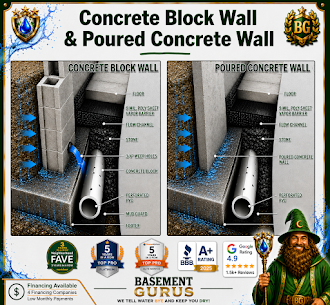
Homeowners are often surprised to learn how many individual components work together in a single drainage system. Skipping any one of them shortens the lifespan of the whole setup.
Drainage Membrane Along the Wall Base
A dimpled membrane, often installed at the base of the wall, channels water downward instead of letting it seep across the floor. This relieves hydrostatic pressure before it ever becomes a visible leak.
Weep Holes in Block Foundations
Homes built with hollow concrete block foundations trap water inside the block cores themselves. Small weep holes drilled near the base of the wall let that trapped water escape into the drainage system instead of pooling invisibly inside the block for years.
Washed Drainage Stone
Clean, washed stone surrounds the drain pipe so water can move freely instead of getting trapped in fine soil or clay. This is one of the most overlooked details in a budget installation. Using unclean or debris-covered stone can quickly reduce its effectiveness.
Perforated Pipe
The pipe itself is slotted or perforated along its length so it can pull in water from multiple points, not just a single low spot. It carries that water to the sump pump basin, where it’s pumped out and away from the foundation.
Sediment Barrier
A fabric or mesh barrier keeps fine soil particles from washing into the pipe and clogging it over time. Without this layer, even a well-built system can silt up within a few years.
The Foundation Footer
Every drainage system is designed around the footer, the structural base your entire foundation sits on. Water naturally travels along the footer before it reaches your basement floor, which is exactly why the drain is installed at that level rather than higher up the wall.
Each piece plays a specific role, and a system missing even one of them tends to fail early, usually right when you need it most during a heavy storm.
Interior vs. Exterior French Drains
Philadelphia homeowners typically choose between two approaches, and the right one depends on your home’s layout and how the water is entering.
Interior drains run along the inside perimeter of the basement floor, just beneath the slab. They’re less invasive to install since there’s no excavation around the outside of the house, which matters a lot for rowhomes and twins with little to no side yard access.
Exterior drains sit outside the foundation wall, intercepting water before it ever reaches the structure. They tend to cost more because of the excavation involved, but they can also address surface drainage issues around the yard, not just basement seepage.
Many Philadelphia properties, especially older ones near Manayunk, Roxborough, and parts of Northeast Philly with sloped lots, benefit from a combination of both.
Signs Your Philadelphia Basement Needs a Drainage Solution
Some warning signs are obvious. Certain problems progress slowly, making them easy to overlook over time.
- A white, chalky residue (efflorescence) forming on basement walls
- A musty smell that never fully goes away, even after cleaning
- Peeling paint or bubbling drywall near the base of a wall
- Puddling near the same spot every time it rains
- Rust stains around floor drains or the base of support columns
- Warped baseboards or trim in a finished basement
- A sump pump that seems to run constantly, even during dry stretches
A single warning sign may not indicate the need for a complete drainage system, but multiple recurring issues often point to ongoing groundwater intrusion.
Why Philadelphia’s Soil and Older Homes Make Drainage Tricky
The clay and silty soil found throughout Philadelphia tends to hold water rather than drain it efficiently. Clay expands when it’s saturated and contracts when it dries, which puts cyclical stress on foundation walls year after year. Add in a housing stock where a huge share of basements were built more than 70 years ago, often with stone or block foundations rather than poured concrete, and you get a city where water problems are more the rule than the exception.
Rowhome construction adds another layer. Shared walls between neighboring homes can allow water issues to extend across property lines, while limited lot widths often make exterior drainage work more difficult. A contractor who’s worked extensively in Philadelphia neighborhoods understands these constraints going in, rather than treating every basement like a standard suburban build.
The Installation Process, Step by Step
- Inspection. A technician walks the basement, checks for cracks, moisture patterns, and grading issues outside, and identifies where water is actually entering.
- Planning the layout. The drain path is mapped around the perimeter, accounting for support columns, stairs, and where the sump pump basin will sit.
- Excavation. A trench is cut along the interior or exterior perimeter, usually a few inches deep and wide enough to accommodate the pipe and stone bed.
- Placing the drainage layer. Membrane, stone, and perforated pipe go in together, angled slightly to keep water moving toward the sump basin instead of sitting still.
- Connecting to the sump pump. The pipe ties into a sump basin equipped with a pump that discharges water well away from the foundation.
- Sealing and finishing. Concrete is poured back over the trench, and any wall penetrations are sealed to prevent water or radon from finding a new path in.
A typical basement can be done in one to two days, depending on size and whether both interior and exterior work is involved.
Common Mistakes Homeowners and Contractors Make
Ignoring the footer level. Installing a drain too shallow, above the footer, misses water before it has already built up pressure against the wall.
Skipping the sediment barrier. It’s a small cost upfront, but leaving it out means a system that clogs within a few years instead of lasting decades.
Using unwashed stone. Stone straight from a construction pile, rather than clean washed stone, fills with fine particles almost immediately and chokes water flow.
Undersizing the sump pump. A drain system is only as good as the pump moving water out of the basin. A pump that’s too small for the volume of water coming in will run constantly and burn out early.
No battery backup. Power outages tend to happen during the exact storms that cause basement flooding. A sump pump without backup power stops working at the worst possible moment.
Maintaining Your French Drain System
A well-installed system needs relatively little attention, but a few habits extend its life significantly:
- Test the sump pump every few months by pouring a bucket of water into the basin
- Keep gutters and downspouts clear so surface water isn’t adding to the load
- Check that downspout extensions carry water at least four to six feet from the foundation
- Have the system inspected every couple of years, especially before a rainy spring
- Replace pump batteries on a backup system every two to three years
How Much Does a French Drain Cost in Philadelphia?
Pricing depends on whether the work is interior, exterior, or both, the length of the perimeter, and whether a sump pump and battery backup are part of the job. Costs also shift based on access, since narrow rowhome lots can add labor time compared to a suburban property with open yard space. A written, itemized quote after an in-person inspection is the only reliable way to know what a specific home needs.
At Basement Gurus, our senior inspectors walk the full basement and exterior grading before recommending anything, so homeowners aren’t paying for components their home doesn’t actually need.
Conclusion
A basement french drain isn’t one product, it’s a system of parts working together to solve a problem that will only get worse with time. Understanding what goes into a proper installation, from the drainage membrane to the sediment barrier to the sump pump doing the final work, helps Philadelphia homeowners ask better questions and recognize a corner-cutting quote when they see one. If your basement has shown any of the warning signs above, getting an inspection now is a lot less disruptive than dealing with standing water after the next big storm.
Frequently Asked Questions
How long does a basement french drain system last? A properly installed system with washed stone, a sediment barrier, and routine sump pump maintenance typically lasts 25 to 30 years or longer.
Will installing a french drain damage my basement floor? Installation involves a slim perimeter trench, with the concrete professionally restored afterward. Most homeowners see no lasting difference in the floor’s appearance.
Can I install a french drain myself? It’s possible for a small, simple project, but getting the slope, footer placement, and stone quality right takes experience. A poorly graded drain can trap water instead of moving it, which often causes more damage than doing nothing.
Do I need a sump pump if I already have a french drain? Yes. The drain collects water, but the sump pump is what actually removes it from the basement. Without one, water just pools in the drain system instead of leaving the house.
How do I know if my basement’s water problem is from the foundation or from surface drainage? A professional inspection is the most reliable way to tell, but persistent puddling near downspouts often points to grading and gutter issues, while water appearing along wall-floor joints usually points to groundwater and hydrostatic pressure.
Does Philadelphia’s older housing stock make drainage work harder? Yes, particularly homes with stone or block foundations and rowhomes with limited exterior access. These properties often need a customized combination of interior and exterior solutions.
How soon can a drainage system be installed once I get a quote? Timelines vary by season and contractor availability, but many companies, including Basement Gurus, can typically schedule an inspection and provide a written estimate within a few days of first contact.
If your basement has been showing any of these warning signs, don’t wait for the next storm to find out how bad it’s gotten. Basement Gurus offers free inspections across the Philadelphia area, with a senior technician walking your home to build a drainage plan suited to your specific foundation and soil conditions. Reach out to schedule your free estimate and start keeping water where it belongs, outside.