



Top Waterproofing Techniques to Ensure Your Home’s Foundation Stays Strong and Dry

Effective waterproofing protects your home’s foundation from moisture, mold, and structural damage. This guide reviews proven waterproofing techniques so you can choose the right approach for your property. Homeowners commonly face water intrusion, mold growth and deterioration when waterproofing is inadequate. We cover interior and exterior waterproofing, sump pump installation, foundation crack repair and other methods so you can protect your home and preserve its value.
Interior Waterproofing

Interior waterproofing stops water from entering living spaces by managing moisture where it appears. It’s the preferred approach for homes with existing leaks because it addresses water once it reaches the interior. Common interior measures control humidity and divert water away from walls and floors.
How Do Interior Waterproofing Methods Protect Your Foundation?
Interior systems protect foundations by blocking and channeling moisture. Sealants and waterproof coatings form a barrier while interior drainage and discharge systems move water out of vulnerable areas. Together these measures reduce water exposure and help preserve structural integrity.
What Are the Best Options for Interior Waterproofing?
Key interior options include practical, proven systems that manage and remove water from basements and crawl spaces:
- Sealants : These are applied to walls and floors to create a waterproof barrier.
- Interior Drainage Systems : These systems collect and redirect water away from the foundation.
- Sump Pumps : Installed to remove water that accumulates in the basement or crawl space.
Used together, these solutions keep interior spaces dry, lower mold risk, and protect your foundation.
Exterior Waterproofing
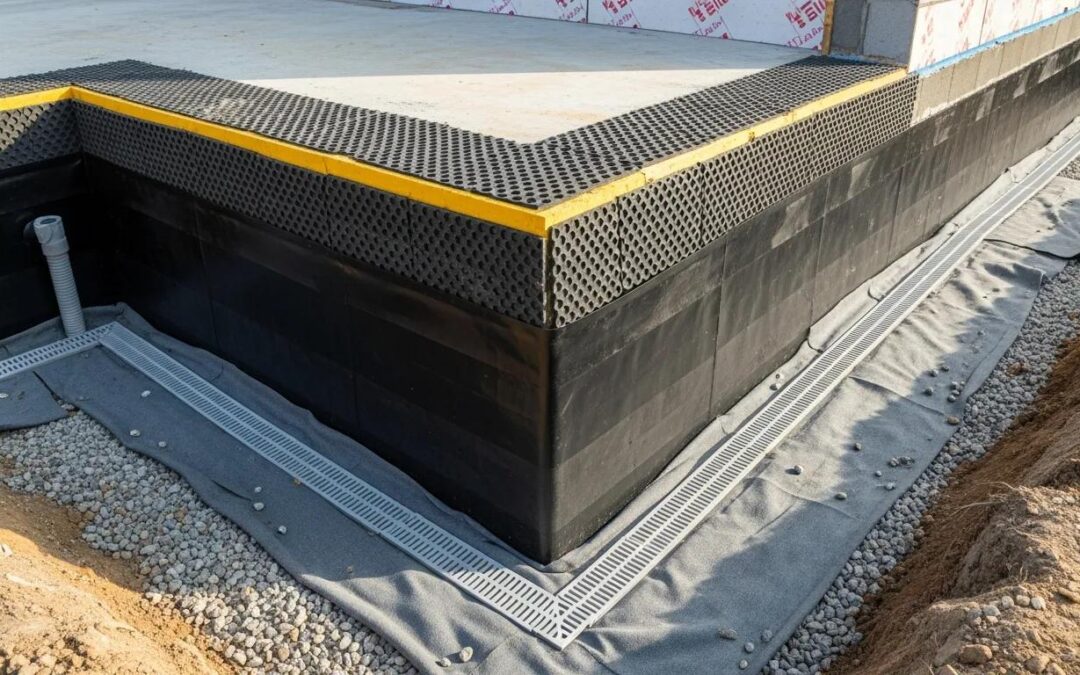
Exterior waterproofing prevents water from reaching the foundation by treating the outside of the structure. It usually involves excavation to apply membranes and exterior drains. For new builds or major renovations, exterior measures provide durable protection by stopping water before it contacts the foundation.
Research shows waterproofing membranes play a central role in protecting structures from moisture-related damage.
Protecting Buildings from Water with Waterproofing Membranes
Many destructive processes affecting building materials occur where water or moisture is present, so structures must be protected from rainwater and groundwater to preserve indoor comfort and safety. Effective protection can also influence occupants’ health and wellbeing.
The durability of mechanical properties of flexible waterproofing membranes used on ventilated terraces under long term exposure to high temperatures, B Francke, 2025
What Exterior Waterproofing Solutions Offer Long-Term Protection?
Exterior systems create an external barrier to keep soil moisture away from the foundation. Common long-term solutions include:
- Waterproof Membranes : These are applied to the exterior of the foundation to prevent water penetration.
- French Drains : Installed to redirect water away from the foundation, reducing hydrostatic pressure.
- Grading : Ensuring the landscape slopes away from the foundation to prevent water accumulation.
Combined, these approaches form a durable defense that reduces the chance of foundation damage.
Sump Pump Installation
Sump pumps remove accumulated water from basements and crawl spaces, making them a key part of many waterproofing systems. Properly installed pumps reduce standing water after heavy rains or snowmelt and lower the risk of mold and structural harm.
Why Is Sump Pump Installation Crucial for Basement Waterproofing?
A sump pump actively expels water before it causes damage. By keeping the basement dry, pumps help prevent mold and protect structural components. Routine checks and cleaning ensure reliable operation when you need it.
What Maintenance Is Required to Ensure Sump Pump Effectiveness?
To ensure sump pump effectiveness, homeowners should:
- Test the Pump Regularly : Check that the pump activates and deactivates properly.
- Clean the Sump Pit : Remove debris that may obstruct the pump’s operation.
- Inspect the Discharge Line : Ensure that water is being directed away from the foundation.
Regular testing, cleaning and inspections extend pump life and help keep basements dry.
Foundation Crack Repair

Cracks in a foundation can let water in and compromise stability. Prompt repair protects the structure and prevents moisture-related problems from worsening. The right repair depends on crack size, location and cause.
What Are the Best Options for Repairing Foundation Cracks?
Common, effective repair methods include targeted injections and structural reinforcements:
- Epoxy Injection : This method involves injecting epoxy resin into the crack to seal it and restore structural integrity.
- Polyurethane Foam Injection : This technique uses expanding foam to fill cracks and prevent water intrusion.
- Crack Stitching : A method that involves reinforcing the foundation with stainless steel bars to stabilize the structure.
When chosen correctly, these repairs seal openings, restore strength and reduce future water entry.
How Does Crack Repair Prevent Further Water Damage?
Repairing cracks seals pathways for moisture to enter the foundation. That reduces mold risk and slows structural decay, helping your home remain stable over time.
French Drain Systems
French drains manage groundwater around the foundation with a gravel trench and perforated pipe that redirects water away from the home. Proper installation reduces hydrostatic pressure and the risk of basement flooding.
How Do French Drains Work?
French drains collect water that pools near the foundation and channel it away through a perforated pipe. The gravel filter helps keep debris out so the system continues to operate effectively over time.
What Are the Benefits of French Drain Systems?
The benefits of French drain systems include:
- Effective Water Management : Redirects water away from the foundation, reducing hydrostatic pressure.
- Prevention of Flooding : Helps prevent water accumulation in basements and crawl spaces.
- Long-Term Durability : With proper installation, French drains can last for many years without significant maintenance.
These benefits make French drains a reliable choice for controlling groundwater near foundations.
Crawl Space Encapsulation
Encapsulation seals a crawl space to stop ground moisture and improve indoor air quality. For unconditioned crawl spaces, this approach controls humidity and lowers the chance of mold and rot.
How Does Effective Waterproofing Reduce Mold Growth?
Waterproofing reduces mold by eliminating the moisture mold needs to grow. Sealing surfaces and providing proper ventilation or dehumidification keeps humidity low and supports healthier indoor air.
What Crawlspace Encapsulation Techniques Improve Air Quality?
Crawlspace encapsulation techniques that improve air quality include:
- Vapor Barriers : These are installed on the ground and walls to prevent moisture from entering the crawl space.
- Dehumidifiers : Used to control humidity levels and reduce moisture in the air.
- Insulation : Proper insulation helps maintain temperature and prevent condensation.
Implemented together, these measures reduce moisture, improve air quality and protect the structure.
Waterproofing Paint
Waterproofing paint offers a cost-conscious way to protect basement walls and floors. It forms a moisture-resistant layer while allowing surfaces to breathe, but it works best as part of a broader strategy.
What Are the Limitations of Waterproofing Paint?
Waterproofing paint can help against minor dampness but is not a substitute for drainage systems or sump pumps. If cracks or significant water issues exist, paint alone may not provide sufficient protection.
How Can Waterproofing Paint Be Applied Effectively?
To apply waterproofing paint effectively, homeowners should:
- Prepare the Surface : Clean and repair any cracks or damage before application.
- Follow Manufacturer Instructions : Adhere to recommended application techniques and drying times.
- Apply Multiple Coats : For optimal protection, multiple coats may be necessary.
Following these steps improves the paint’s performance and helps reduce moisture intrusion.
| Method | Effectiveness | Cost |
|---|---|---|
| Interior Waterproofing | High | Moderate |
| Exterior Waterproofing | Very High | High |
| Sump Pump Installation | High | Moderate |
| Foundation Crack Repair | High | Variable |
| French Drain Systems | Very High | High |
| Crawl Space Encapsulation | High | Moderate |
| Waterproofing Paint | Moderate | Low |
This table summarizes effectiveness and cost to help you compare common waterproofing options and choose a strategy that fits your needs.
Frequently Asked Questions
What are the signs that my home needs waterproofing?
Warning signs include water stains on walls or ceilings, musty odours, visible mould, damp basements or crawl spaces, foundation or wall cracks, and frequent flooding during heavy rain. These indicators suggest you should evaluate waterproofing options before damage worsens.
How often should I inspect my waterproofing systems?
Inspect systems at least once a year, ideally before the rainy season. Check for cracks, blocked drains, and sump pump function. After major storms, re-check systems to catch any new issues early.
Can I perform waterproofing myself, or should I hire a professional?
Some tasks, like applying waterproof paint or simple drain maintenance, can be DIY. Complex work—foundation repairs, full exterior waterproofing and sump pump installation—usually requires professional skills and equipment to ensure lasting results.
What is the cost range for waterproofing my home?
Costs vary by project size, method and severity of water problems. Typical comprehensive solutions range from $1,500 to $5,000, while extensive exterior work or major foundation repairs can exceed $10,000. Obtain multiple quotes to find the right balance of cost and durability.
How long do waterproofing solutions typically last?
Longevity depends on the method and conditions. Waterproofing paint may last 5 to 10 years, exterior membranes 10 to 20 years with upkeep, and sump pumps typically 5 to 10 years depending on use and maintenance. Regular inspections extend service life.
What should I do if I find mold in my basement?
Address mold quickly to reduce health risks and further damage. Identify and stop the moisture source, clean affected areas with appropriate products, or hire professional remediation for extensive infestations. After removal, implement waterproofing measures to prevent recurrence.
Conclusion
Implementing effective waterproofing techniques preserves your home’s foundation and prevents moisture-related problems. By understanding available methods, you can select solutions that protect your property. For those in need of professional assistance, Basement Gurus LLC specializes in basement and foundation waterproofing services and can recommend a tailored plan to keep your home dry.
Conclusion
Choosing the right waterproofing approach is essential to safeguard your foundation and indoor environment. Evaluate your options and consider professional guidance from Basement Gurus LLC to implement long-term solutions that protect your home and provide peace of mind.